


How to Build an Impressive Academic Profile for Overseas Education
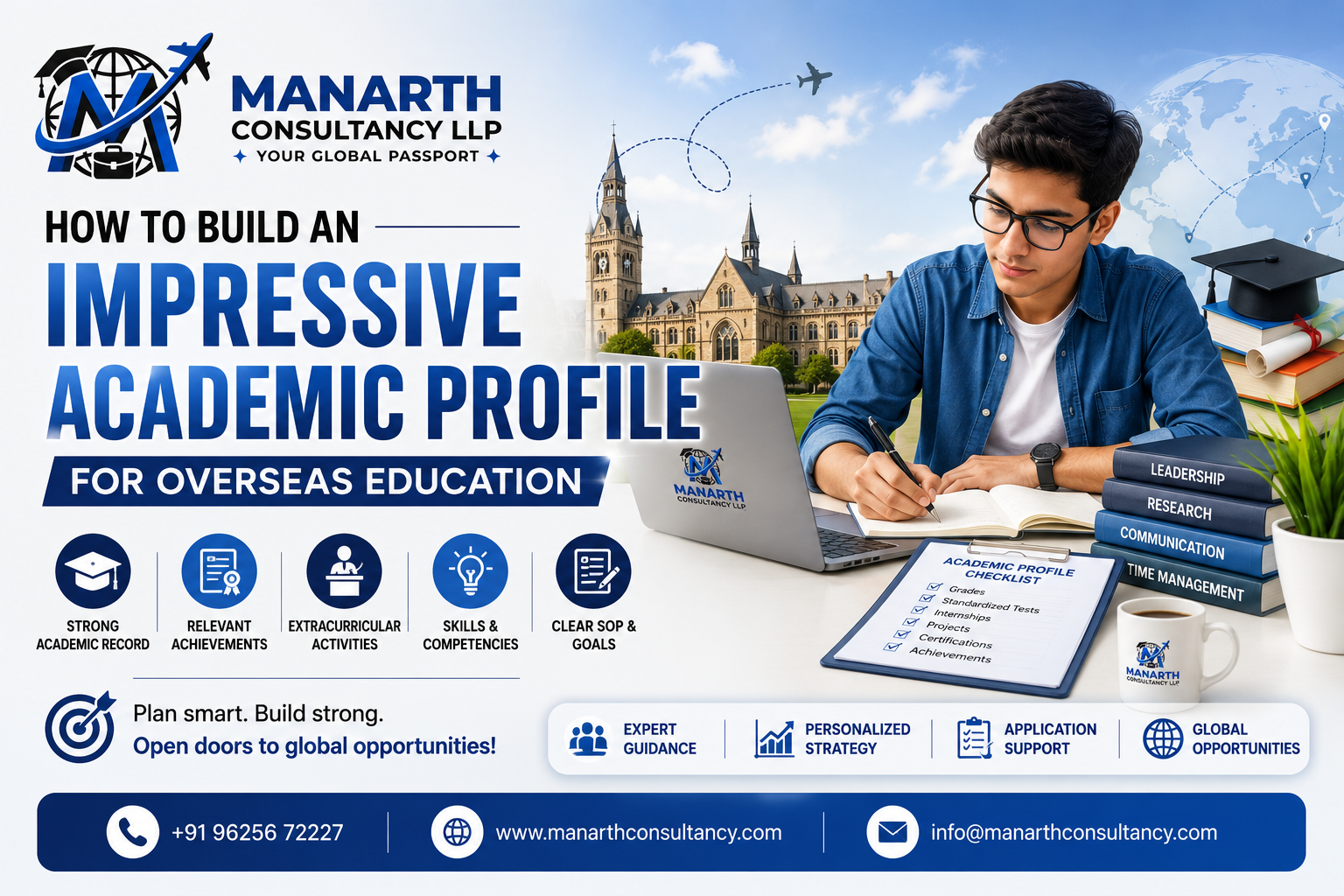
How to Build an Impressive Academic Profile for Overseas Education
Introduction
Studying at an international university is an exciting opportunity for students who want to expand their academic knowledge, gain global exposure, and develop professional skills. However, securing admission to a foreign university requires more than selecting a destination and submitting an application. Students must demonstrate their academic potential, personal interests, practical experience, and readiness for international education.
For Indian students, understanding the importance of profile building for study abroad can make the university application process more organized and purposeful. Universities may evaluate several aspects of an applicant’s background, including academic performance, extracurricular participation, internships, research experience, language proficiency, and personal achievements.
A strong academic profile for study abroad helps students communicate their capabilities and demonstrate why they are suitable candidates for their preferred programs. Although admission requirements vary between institutions and countries, preparing a well-rounded student profile for studying abroad can help applicants present their qualifications more effectively.
This guide explains how to build an impressive academic profile for overseas education, improve your university application, and prepare for international admission opportunities.
What Is an Academic Profile for Study Abroad?
An academic profile is a comprehensive representation of a student’s educational background, achievements, skills, experiences, and interests. It helps universities understand an applicant beyond their examination scores.
A student profile for foreign universities may include:
- Academic transcripts and grades
- Educational qualifications
- Academic achievements and awards
- Extracurricular activities
- Internships and professional experience
- Research projects and publications
- Volunteer work and leadership activities
- Language proficiency
- Academic CV or student resume
- Statement of Purpose (SOP)
- Letters of recommendation
- Relevant certifications and projects
The importance of each component depends on the university, degree level, subject, and destination country.
For example, a research-oriented postgraduate program may place greater emphasis on research experience and academic recommendations, whereas an undergraduate application may consider school performance, extracurricular activities, and personal interests.
Understanding study abroad profile requirements before beginning the application process allows students to identify areas that need improvement.
1. Maintain Strong Academic Performance
Academic performance is one of the most important elements of profile building for foreign universities. Your grades demonstrate your ability to understand subjects, complete assignments, and meet academic expectations.
Students planning to study abroad should focus on maintaining consistent academic performance throughout their school or college education.
How to Improve Your Academic Profile
If you are wondering how to improve your academic profile for international admissions, consider these practical steps:
- Establish a consistent study routine.
- Identify subjects that require additional attention.
- Seek academic support when necessary.
- Participate in classroom discussions.
- Complete assignments before deadlines.
- Improve subject-specific knowledge.
- Maintain organized academic records.
Students should also understand how to improve grades for studying abroad if their academic performance has been inconsistent.
While strong grades can support an application, students should remember that university admission requirements differ. Some institutions evaluate applicants holistically, while others have specific academic eligibility criteria.
Academic excellence for foreign universities is not always about achieving perfect marks. It also involves demonstrating genuine subject knowledge, academic curiosity, and the ability to pursue challenging coursework.
2. Participate in Meaningful Extracurricular Activities
Extracurricular activities for study abroad applications can demonstrate interests, initiative, teamwork, and personal development.
Universities may consider activities outside the classroom when assessing an applicant’s overall background, particularly when these activities relate to the intended program or demonstrate valuable personal qualities.
Best Extracurricular Activities for Study Abroad
The best extracurricular activities for study abroad are those that genuinely reflect your interests and commitment.
Students do not need to participate in every available activity. Instead, they should focus on meaningful involvement and demonstrate how their experiences contributed to personal development.
Similarly, students applying for environmental science programs could participate in sustainability projects or environmental volunteering.
These experiences can help students build a competitive study abroad profile while developing practical skills.
3. Gain Internship and Practical Experience
Internships can strengthen a student’s academic profile by providing practical exposure to a particular industry or subject.
For students applying to postgraduate programs, professional experience may be particularly valuable when the selected course emphasizes practical learning or industry engagement.
Internships for study abroad students can include:
- Corporate internships
- Research internships
- Industry training
- NGO internships
- Business development projects
- Technical internships
- Professional work experience
Students should choose opportunities that align with their academic interests and career objectives.
Internships can also help students understand their professional interests and develop skills required for studying abroad and succeeding in international academic environments.
However, internships are not compulsory for every university or program. Applicants should review their chosen institution’s admission requirements before prioritizing professional experience.
4. Develop Research Experience and Academic Projects
Research experience for university admission can be valuable, particularly for students applying to research-based master's programs, doctoral programs, or specialized academic courses.
Research demonstrates curiosity, analytical thinking, problem-solving abilities, and familiarity with academic methods.
Projects for study abroad applications should ideally demonstrate subject knowledge and practical understanding.
For instance, a computer science student could develop a software application, while a finance student could conduct a research project involving financial analysis.
Students should document their projects carefully, explaining their objectives, responsibilities, methods, and outcomes.
Research experience is not mandatory for all programs. Its relevance depends on the academic level and course requirements.
5. Earn Relevant Certifications and Develop Skills
Certifications can help students demonstrate additional knowledge beyond their formal education.
Certifications for study abroad applications may be particularly useful when they relate directly to the intended academic program.
Examples include:
- Programming and technology certifications
- Business and management certifications
- Financial analysis courses
- Data analytics training
- Digital marketing certifications
- Project management courses
- Academic writing courses
- Language learning certifications
Students should prioritize quality and relevance rather than collecting certificates without a clear purpose.
Certifications can support academic achievements for university admission, but they generally do not replace the formal educational qualifications required by universities.
6. Improve Language Proficiency
Language proficiency is an important part of study abroad preparation, especially when students apply to programs taught in a language different from their native language.
Many international universities require applicants to demonstrate proficiency in English or the language of instruction.
Depending on the institution, accepted examinations may include IELTS, TOEFL, PTE Academic, or other recognized language tests.
Students should carefully review the language requirements of their preferred universities before booking an examination.
How to Prepare for Language Tests
- Understand the examination format.
- Practice reading and listening regularly.
- Improve academic vocabulary.
- Develop writing skills.
- Practice speaking confidently.
- Take mock examinations.
- Identify areas that require improvement.
Language proficiency can support your study abroad application requirements and help prepare you for lectures, assignments, presentations, and communication in an international academic environment.
7. Build a Strong Student Resume or Academic CV
A student resume for university application provides a concise overview of your qualifications and experiences.
An academic CV for university admission may be more detailed, particularly for postgraduate, research, or academic programs.
Tips for Preparing an Effective CV
Keep your document clear, accurate, and organized.
Use simple formatting, professional language, and concise descriptions. Highlight experiences that are relevant to your intended program.
Avoid exaggerating achievements or including activities that you cannot explain during an interview.
A well-prepared CV can help universities understand your academic background and identify experiences that support your application.
8. Write a Compelling Statement of Purpose
A Statement of Purpose, commonly called an SOP, is an important document for many international university applications.
An SOP for study abroad explains your academic background, motivation, career objectives, and reasons for choosing a particular program and institution.
How to Improve Your SOP
Begin with a clear explanation of your academic interests.
Discuss relevant achievements, projects, internships, or experiences that demonstrate your preparation for the program.
Explain your reasons for selecting the university using specific and accurate information.
Avoid generic statements that could apply to any institution.
Your SOP should reflect your genuine academic journey and future aspirations rather than simply repeating information from your resume.
9. Obtain Strong Letters of Recommendation
A letter of recommendation for study abroad provides an additional perspective on your academic abilities, personal qualities, and potential.
Universities may request recommendations from professors, academic supervisors, employers, or other suitable individuals.
The requirements depend on the university and program.
How to Prepare for Recommendations
- Identify suitable recommenders early.
- Choose individuals familiar with your academic work.
- Provide accurate information about your intended program.
- Share your resume and relevant achievements.
- Respect the university’s submission process.
- Give recommenders sufficient time.
A strong recommendation should provide meaningful examples of your performance, abilities, and suitability for the intended course.
Students should always follow university guidelines regarding recommendation letters and submission procedures.
10. Prepare a Complete Study Abroad Application Checklist
A study abroad application checklist can help students organize their documents and avoid overlooking important requirements.
Although documentation varies by destination and institution, students may commonly need:
- Passport
- Academic transcripts
- Degree or school certificates
- Statement of Purpose
- Student resume or academic CV
- Letters of recommendation
- Language proficiency scores
- Application forms
- Financial documents, where required
- Portfolio, if applicable
- Additional university-specific documents
Documents Required to Study Abroad
Students should confirm the documents required to study abroad directly from their chosen university’s official website.
Some universities may require certified translations of academic documents when the original documents are not issued in an accepted language.
Applicants should also check whether notarization, legalization, apostille, or other document formalities are applicable to their specific circumstances.
Preparing documents in advance can make the study abroad application process more manageable.
11. Understand University Admission Requirements
University admission requirements for international students vary considerably.
Students should review study abroad eligibility criteria before applying.
Understanding study abroad admission requirements for Indian students is particularly important because educational qualifications and documentation requirements may differ between countries.
Students should avoid relying solely on general admission advice and verify requirements directly with their selected universities.
12. How to Apply to Foreign Universities Successfully
Understanding how to apply to foreign universities involves several important steps.
Step 1: Identify Your Academic Goals
Decide which course, degree level, and career path you want to pursue.
Step 2: Research Suitable Universities
Compare universities based on academic reputation, course curriculum, location, admission requirements, and available student support.
Step 3: Check Eligibility
Review academic qualifications, language requirements, application deadlines, and any program-specific prerequisites.
Step 4: Prepare Your Academic Profile
Organize your transcripts, CV, SOP, recommendations, achievements, and supporting documents.
Step 5: Submit Applications
Complete the application forms accurately and submit all required documents before the deadlines.
Step 6: Monitor Application Status
Check university communication regularly and respond to requests for additional information.
Step 7: Prepare for the Next Stage
Depending on your circumstances, the next steps may include interviews, financial documentation, scholarship applications, or visa preparation.
Following a structured university application process for international students can help applicants remain organized throughout their admissions journey.
13. Build Your Profile for Scholarships
Students seeking financial assistance should consider how their academic profile aligns with scholarship requirements.
Study abroad scholarships may be based on academic performance, financial need, leadership, extracurricular activities, research achievements, or other criteria.
Academic achievements for study abroad scholarships can include:
- Strong academic performance
- Relevant research projects
- Leadership experience
- Community involvement
- Academic competitions
- Professional achievements
- Subject-specific accomplishments
Students should research scholarship eligibility criteria carefully.
Some scholarships are available only to students applying for specific programs, while others may require separate applications.
A strong academic profile can support scholarship applications, but scholarship awards depend on the individual program’s selection criteria and available funding.
14. Common Mistakes to Avoid During Profile Building
Students sometimes focus on the quantity of achievements instead of the quality of their experiences.
Avoid the following mistakes:
Participating in Activities Without Purpose
Extracurricular activities should reflect genuine interests and personal development.
Ignoring Academic Performance
Profile-building activities should complement your academic responsibilities rather than distract from them.
Submitting Generic SOPs
Your SOP should explain your individual academic interests and reasons for choosing the program.
Exaggerating Achievements
Universities may ask applicants to explain their experiences. Always provide truthful information.
Starting Too Late
Internships, research projects, language examinations, and recommendations may require time and planning.
Ignoring University-Specific Requirements
Different institutions have different expectations. Always review the official requirements before applying.
15. Pros and Cons of Building an Academic Profile for Overseas Education
Academic profile preparation can help students organize their applications and demonstrate their readiness for international education. However, it requires thoughtful planning and realistic expectations.
Pros
- Helps students identify their academic strengths.
- Encourages participation in meaningful extracurricular activities.
- Supports the development of practical and professional skills.
- Helps students prepare organized university applications.
- Encourages academic and personal development.
- May support scholarship applications.
- Helps students communicate their interests and achievements effectively.
Cons
- Requires considerable time and planning.
- Some internships, courses, or examinations may involve additional expenses.
- Students may feel pressured to collect unnecessary certificates.
- Managing academics alongside extracurricular activities can be challenging.
- Profile-building activities do not guarantee university admission.
- Excessive focus on achievements may distract from genuine learning.
The best approach is to prioritize meaningful experiences that support your academic goals rather than trying to create an artificially impressive profile.
16. How Manarth Consultancy LLP Can Support Your Study Abroad Journey
Preparing for overseas education involves several interconnected steps, including university selection, academic profile preparation, application documentation, and understanding admission requirements.
Manarth Consultancy LLP provides study abroad and university admission guidance for students exploring international education opportunities.
Students can seek guidance regarding:
- Study abroad planning
- University and course selection
- Application preparation
- Academic documentation
- Admission requirements
- Application guidance
- Destination-specific education options
With proper planning and informed guidance, students can better understand the requirements of their preferred universities and prepare their applications with greater clarity.
Students should always verify admission requirements, deadlines, tuition fees, scholarship eligibility, and visa conditions through official university and government sources.
Frequently Asked Questions
1. How can I build a strong academic profile for study abroad?
Focus on maintaining good academic performance, participating in meaningful extracurricular activities, gaining relevant internships, developing language proficiency, and preparing a strong SOP and academic CV.
2. Is academic performance important for overseas education?
Yes, academic performance is an important admission consideration for many universities. However, the weight given to grades and other profile components varies by institution and program.
3. Can I study abroad without internships?
Yes. Many universities do not require internships, particularly for undergraduate programs. Internship requirements depend on the course and institution.
4. Which extracurricular activities are useful for study abroad?
Activities related to your academic interests, leadership, teamwork, volunteering, sports, research, and community involvement can help demonstrate personal development.
5. How early should I start profile building for study abroad?
Starting one to two years before your intended application period can provide time to improve academics, gain relevant experience, prepare for language examinations, and organize documentation. The ideal timeline depends on your current qualifications and target program.
6. Does profile building guarantee admission to foreign universities?
No. Profile building can help students present their qualifications effectively, but admission decisions depend on university-specific eligibility criteria, competition, available seats, and other selection factors.
7. What documents are required for overseas education?
Common documents include academic transcripts, educational certificates, passport, SOP, CV, recommendation letters, and language proficiency scores. Additional requirements depend on the university and program.
8. Can students improve their academic profile after graduation?
Yes. Graduates can strengthen their profile through relevant work experience, internships, research, professional certifications, language proficiency, and projects that support their intended course.
Conclusion
Building an impressive academic profile for overseas education requires consistent effort, thoughtful planning, and a clear understanding of your academic objectives.
Students should focus on academic achievements, relevant extracurricular activities, internships, research projects, language proficiency, and well-prepared university application documents.
The objective of profile building for study abroad is not to collect as many achievements as possible. It is to develop a meaningful academic and personal background that reflects your genuine interests, capabilities, and future aspirations.
By understanding study abroad application requirements, researching suitable universities, and preparing documents in advance, Indian students can approach international education with greater confidence and clarity.
Planning to study abroad?
Manarth Consultancy LLP can help you explore overseas education opportunities and understand the university admission process.
Website: https://manarthconsultancy.com/
Email: info@manarthconsultancy.com
Phone: +91 96256 72227
Address: F-126–128, Aditya Arcade, Preet Vihar, Delhi – 110092